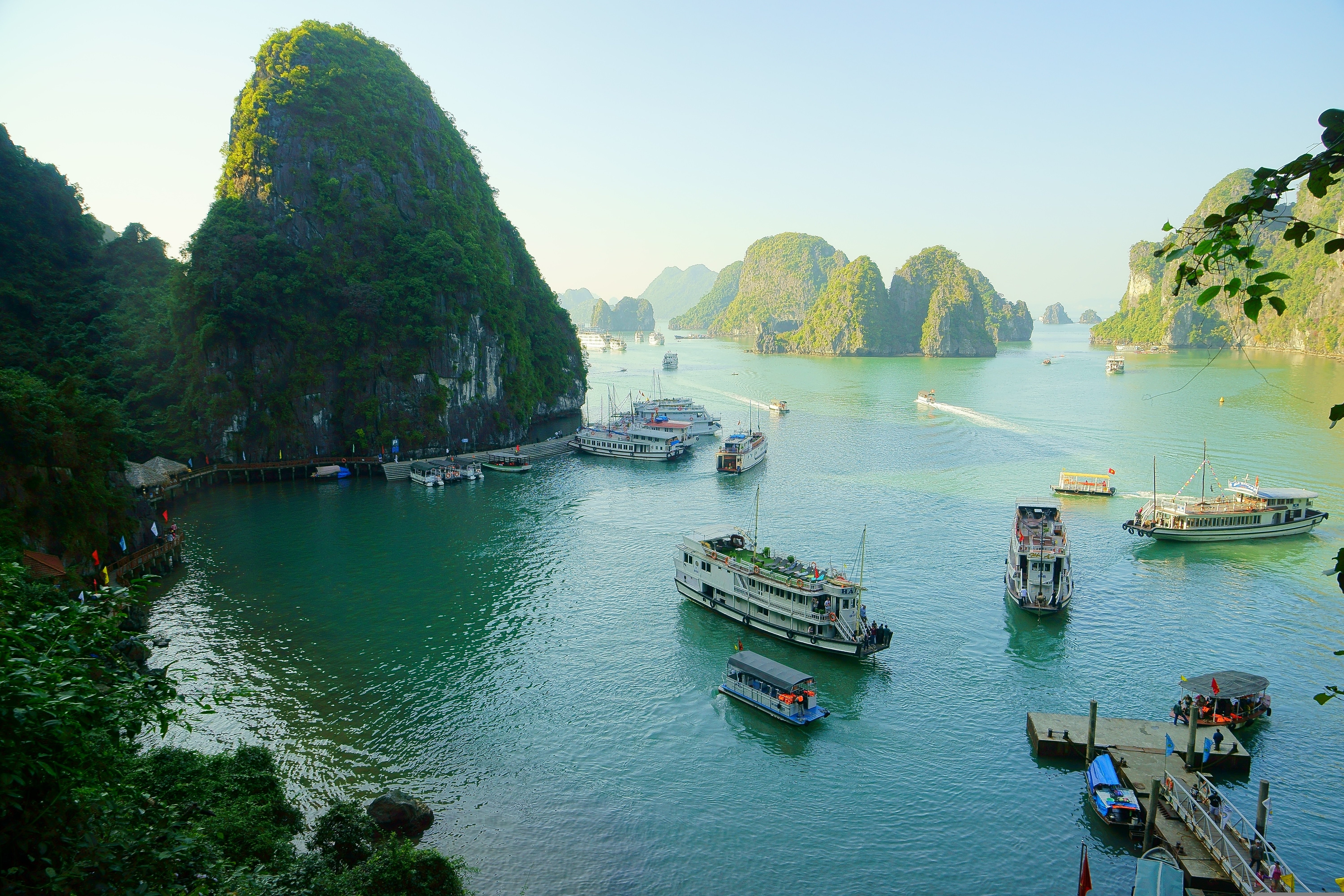

Halong Bay is one of Vietnam's most famous UNESCO sites, recognized as Natural World Heritage in 1994 and expanded in 2000. Heritage Cruise Vietnam offers a profound experience of this heritage.
1. Halong Bay in the UNESCO System
- 1994: Natural World Heritage (aesthetic value)
- 2000: Expanded recognition (geological-geomorphological karst value)
Currently considering a third criterion: ecological and biodiversity value.
2. Halong Bay Formation History
2.1. Geological History (500 Million Years)
Halong Bay results from karst formation over 500 million years. Was once a shallow Cambrian-Devonian sea. Current morphology created in the Pleistocene, 25-30 million years ago.
2.2. Human History
Archaeology finds Halong human traces from 11,000 years ago. The Soi Nhu and Halong cultures are among Southeast Asia's earliest coastal civilizations.
2.3. Halong Legend
"Halong" means "descending dragon." Legend says when invaders came, the Jade Emperor sent Mother Dragon and Baby Dragons to help the Vietnamese. The dragons spat pearls and rocks into the sea, forming today's rocky islands.
3. Special Heritage Values
3.1. Aesthetic Value
1,969 islands across 1,553 km². Unique shapes: Kissing Rocks, Incense Burner Rock, Toad Rock.
3.2. Geological Value
Southeast Asia's most complete karst landscape. Rich cave systems with magnificent stalactites. Unique drowned karst process worldwide.
3.3. Ecological Value
High biodiversity: 2,300 animal species, 1,000 plant species. Cat Ba langur only 70-100 remaining.
3.4. Cultural Value
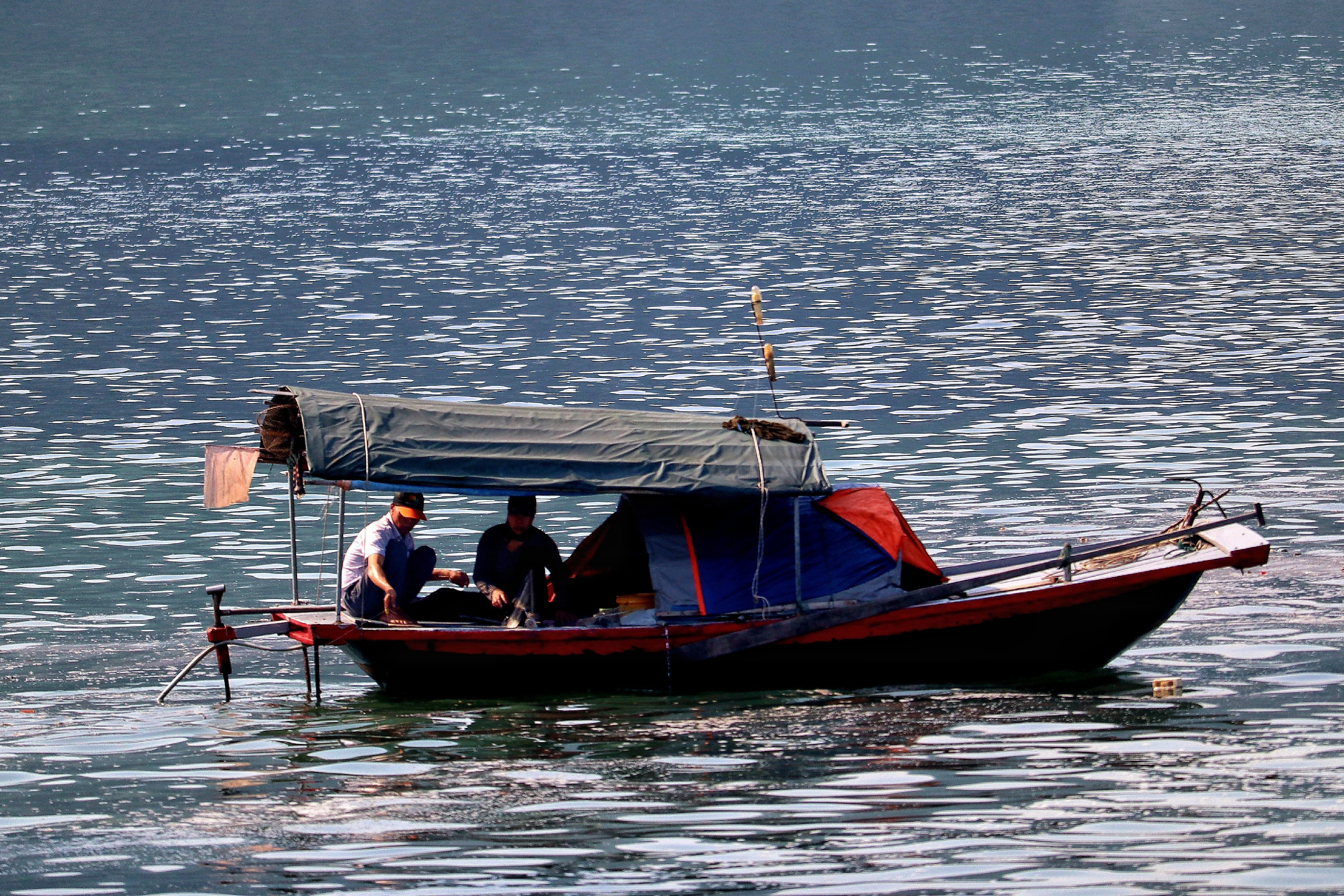
Floating fishing village culture: floating houses, fish cages, floating schools. Traditional lifestyle preserved.
4. Top 10 Heritage Spots in Halong Bay
4.1. Sung Sot Cave
Largest cave, discovered by French in 1901. Two grand chambers with unique stalactites.
4.2. Kissing Rocks
Classic icon. Two limestone rocks 12-13m tall resembling a rooster-hen pair.
4.3. Dau Go Cave
Large cave the French named "Grotte des Marveilles." Has 13th-century Tran Hung Dao traces.
4.4. Trong & Tien Ong Caves
Two caves with important archaeological artifacts. Stone tools, pottery from Soi Nhu era (4,000-6,000 years ago).
4.5. Incense Burner Rock
Massive rock shaped like an incense burner. Vietnam's UNESCO symbol on 200,000 VND banknote.
4.6. Toad Rock
Giant toad-shaped rock sitting on the sea. Legend says it is the Jade Emperor's toad.
4.7. Luon Cave
Natural sea arch allowing kayak passage. Perfect cliff reflection in closed lagoon.
4.8. Titop Island
Named after Soviet cosmonaut Gherman Titov, who visited with Ho Chi Minh in 1962.
4.9. Cua Van Fishing Village
Oldest floating village. UNESCO-recognized cultural value.
4.10. Bo Nau Cave
Small cave with special octagonal entrance. Lesser-known.
5. Heritage Cruise: A Deeper Experience
5.1. Expert Guides
Not regular guides but specialists in geology, history, biology.
5.2. Heritage-Focused Itinerary
Visiting high-heritage-value spots rather than popular check-ins.
5.3. Authentic Cultural Experience
Dinner at fishing villages, meet local fishermen, join traditional activities.
6. Choosing the Right Heritage Cruise
6.1. Heritage Binh Chuan
Cruise recreating ancient Indochina vessel. Small floating museum with cultural artifacts.
6.2. Indochine Premium
Classical French style. Itinerary emphasizes heritage spots on classic Halong Bay.
7. Preserving Heritage for the Future
- Respect regulations in heritage areas
- Don't touch or take artifacts
- Contribute to conservation funds
- Choose sustainable-committed cruises
8. Heritage in the Amour Cruises Journey
While Amour Cruises mainly operates on Lan Ha Bay, it has unique heritage value: Cat Ba with endemic langurs, Cai Beo fishing village culture. 3-4 day tours can include classic Halong Bay with heritage spots. Amour guides are trained in heritage interpretation.
Book Your Journey with Amour Cruises
Let Amour Cruises craft unforgettable memories in poetic Lan Ha Bay. Contact us for personalized itinerary and early-booking offers.
Related Articles
Frequently Asked Questions
When was Halong Bay UNESCO-recognized?
1st: 1994 (natural aesthetic value). 2nd: 2000 (geological karst value). Considering 3rd for ecological value.
How does heritage cruise differ from regular?
Has expert guides (geology, history, biology), heritage-focused itinerary, authentic cultural experience.
What top heritage spots to visit?
Sung Sot Cave, Kissing Rocks, Dau Go Cave, Incense Burner Rock (on 200k VND note), Trong & Tien Ong Caves (archaeology).
How long has Halong Bay formed?
Karst formation over 500 million years. Current morphology created in Pleistocene 25-30 million years ago.
Best cruise for heritage tour?
Heritage Binh Chuan (classical Indochina architecture with floating museum), Indochine Premium (classical French style).
Comments (0)
Be the first to comment.